
Winter Driving in Calgary: Tires, Snow Routes and the Rules Newcomers Miss
Winter Driving in Calgary: Tires, Snow Routes and the Rules Newcomers Miss
Winter driving in Calgary comes with a few local rules that catch newcomers off guard. Winter tires are not required by law in Alberta but are recommended, cars must be moved off blue snowflake signed snow routes when the City declares a parking ban or risk a ticket of up to $120 and impound, and drivers must move over or slow to 60 km/h (or the posted limit, if lower) for stopped roadside vehicles with flashing lights, with a $243 fine and 3 demerits for not doing so.
This guide covers tires, how snow route parking bans work, why your street may never see a plow, the provincial rules around snowplows and roadside workers, getting your car ready for the cold, and where to check conditions before you leave home. All rules are drawn from the City of Calgary and the Government of Alberta.
Key Takeaways
- Winter tires are recommended, not mandatory. Alberta Transportation advises four winter or all weather tires for severe winter conditions.
- Snow route bans move cars off major roads. A ban usually starts about 18 hours after snowfall ends and lasts up to 72 hours; parked cars can be ticketed up to $120 and impounded.
- Residential streets are usually not plowed. Crews level ruts and keep a hard snow pack, and clearing the windrow across your driveway is your job.
- Move over for flashing lights. Moving over or slowing to 60 km/h for stopped roadside vehicles is the law, and speeding fines double when workers or stopped vehicles with flashing lights are present.
- Newcomers from other provinces have 90 days to exchange their driver's licence and switch their vehicle registration to Alberta.
1. Do You Need Winter Tires in Calgary?
Not by law. Alberta Transportation confirms that Alberta has not mandated winter tires, but it recommends four winter or all weather tires for severe winter conditions. Tire rubber stiffens in the cold, while modern winter tires are designed to stay flexible at temperatures approaching minus 30°C.
When you shop, look for the mountain snowflake symbol on the sidewall. It marks tires that meet a specific snow traction performance standard. Because Calgary's residential streets are usually left snow packed (see section 3), many drivers who skipped winter tires in milder cities find they make the biggest difference here on side streets, hills and at stop signs.
2. What Is a Snow Route, and How Does a Parking Ban Work?
Snow routes are major roads, collector roads and most bus routes that the City clears first after a storm. They are marked with blue signs showing a white snowflake, but signs may only appear where the route begins, so a street without a visible sign can still be a snow route. You can check any address with the City's snow route parking ban map.
When the City declares a ban, parking is restricted on every snow route citywide so crews can clear them. Here is how it works, according to the City's snow route parking bans page:
| Question | Answer |
|---|---|
| When is a ban announced? | Usually one to two days before it starts |
| When does it start? | Typically about 18 hours after snowfall ends |
| How long does it last? | Up to 72 hours, or until the City lifts it |
| What if I leave my car there? | A ticket of up to $120, and the vehicle may be towed |
| Where does a towed car go? | The Municipal Impound Lot, not around the corner (403-537-7111) |
| Where can I park instead? | Calgary Parking offers free overnight parking, 9 p.m. to 6 a.m., in its parkades and surface lots during a ban |
The towing and impound details come from the City's snow route parking ban enforcement FAQ, which also notes that downtown avenues and snow route ParkPlus zones are exempt during the day, with an overnight ban from 9 p.m. to 6 a.m.
Sign up once, never get caught
The City will text or email you when a ban starts and when it is lifted. Sign up at roadsnotifications.calgary.ca, or call 311 for an automated update.
3. Why Is My Residential Street Not Plowed?
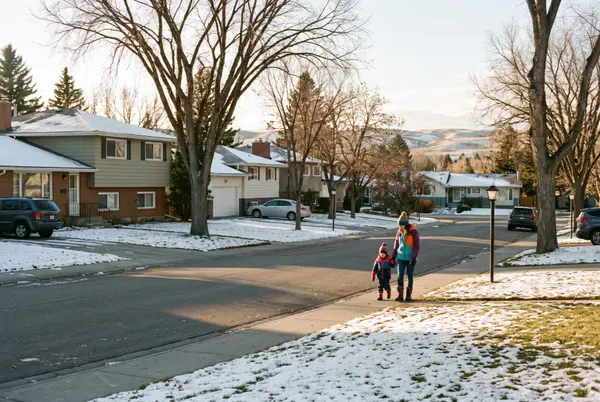
Under the City's Priority Snow Plan, crews clear the busiest roads first, within 0 to 18 hours after snow stops, then major community roads and bus routes within 18 to 36 hours. Residential streets are not typically plowed. The City's winter maintenance FAQ explains that crews instead level ruts and sand or salt icy driving lanes when needed, and they do not plow residential streets to bare pavement or curb to curb.
Three practical results for newcomers:
- Expect packed snow and ruts on side streets for days after a big storm, which is where good tires matter most.
- The windrow is yours. When a plow leaves a ridge of snow across your driveway, clearing it is the adjacent property owner's responsibility.
- Back lanes are not maintained in winter. If your garage opens onto a lane, plan for it to stay snowy; you can report a safety concern through 311.
Also note that Deerfoot Trail, Stoney Trail and Tsuut'ina Trail are maintained by the Province of Alberta, not the City.
4. What Winter Driving Rules Do Newcomers Miss?
Move over for flashing lights
- When police, ambulances, fire trucks, tow trucks or maintenance vehicles are stopped with lights flashing, move to the far lane.
- If you cannot move over safely, slow to 60 km/h or the posted limit, whichever is lower.
- Not complying can mean a $243 fine and 3 demerits, and speeding fines are doubled in these zones.
Respect the snowplow
- Do not pass if your view along the side of the plow is blocked or passing would get in its way.
- Stay well back; operators usually let traffic pass every 5 to 8 km when it is safe.
- Breaking the snowplow rules can mean a $324 fine and 3 demerits.
Clear the whole car
- Alberta Transportation's winter tips say to clear all snow and ice from every window, mirror, light and licence plate before driving.
- Keep headlights on, not just daytime running lights, so drivers behind you see your taillights.
Update your paperwork
- Moving from another province? Exchange your driver's licence and switch your vehicle registration within 90 days.
- Moving from another country? Licences from listed countries can be exchanged without a road test; others need testing.
Sources: the Government of Alberta's roadside worker safety rules, driving safely around snowplows, winter driving tips, moving to Alberta from within Canada and exchanging a licence from outside Alberta, which lists the countries eligible for a straight exchange.
5. How Do You Get Your Car Ready for a Calgary Winter?
Start with the battery, block heater and a kit you keep in the vehicle all season.
- Plug in below minus 15°C. The Alberta Motor Association notes that engine fluids can begin to solidify once temperatures drop below minus 15°C, and recommends using your block heater.
- Check the basics. Tires, battery, brakes, antifreeze, wipers, heater and defrost, as Alberta Transportation recommends.
- Keep the tank over half full in case you are stuck or delayed in the cold.
- Pack an emergency kit. Alberta Transportation's list includes a first aid kit, blanket, extra clothing and footwear, flashlight with batteries, ice scraper and snow brush, shovel, booster cables, sand or non clumping kitty litter for traction, non perishable snacks, a candle in a deep tin and waterproof matches.
6. How Should You Drive on Snow and Ice?
Alberta Transportation's winter tips boil down to slowing everything down:
| Situation | What to do |
|---|---|
| Following distance | At least three times your normal distance on wet or slick roads |
| Speed | Drive below the limit when needed; posted limits assume ideal conditions |
| Cruise control | Never use it in winter conditions |
| Bridges and overpasses | Expect ice; bridge decks freeze before the rest of the road |
| Hills | Build a little speed before the hill, then hold it steady on the way up |
| Braking | Brake gently and avoid braking in curves |
| If you skid | Ease off the brake and steer where you want to go, then brake smoothly once the tires grip |
On snowy roads, driving just outside the previous tire tracks can give you better traction. And when a major storm hits, the simplest advice is to wait it out if your trip is not essential.
7. Where Can You Check Road Conditions Before You Leave?
| Resource | What it covers |
|---|---|
| City snow and ice updates | Calgary roads, plowing progress and snow route ban status |
| City roads notifications | Text and email alerts when a parking ban starts and ends |
| 311 | Automated parking ban update, and reporting snow and ice concerns |
| 511 Alberta | Provincial highway conditions, including Deerfoot, Stoney and routes to the mountains; also available by dialling 511 |
Frequently Asked Questions
Are winter tires mandatory in Calgary?
No. Alberta has not made winter tires mandatory, but Alberta Transportation recommends four winter or all weather tires for severe winter conditions. Look for the mountain snowflake symbol, which marks tires that meet a snow traction standard.
What happens if I park on a snow route during a ban?
You can receive a parking ticket of up to $120, and your vehicle may be towed to the Municipal Impound Lot rather than moved around the corner. Bans typically start about 18 hours after snowfall ends and last up to 72 hours.
How do I know if my street is a snow route?
Snow routes are marked with blue signs showing a white snowflake, but signs may only appear where a route begins. Use the City of Calgary's snow route parking ban map or address lookup to check any street.
Does the City plow residential streets in Calgary?
Not typically. Crews focus on major roads, bus routes and priority pathways first. On residential streets they level ruts and sand or salt icy lanes when needed, but do not plow to bare pavement or curb to curb.
Do I have to slow down for snowplows and tow trucks in Alberta?
Yes. For stopped roadside vehicles with flashing lights, move to the far lane or slow to 60 km/h or the posted limit, whichever is lower. Not complying can mean a $243 fine and 3 demerits, and speeding fines are doubled.
How long do I have to get an Alberta driver's licence after moving?
If you are moving from another Canadian province, you must exchange your driver's licence and switch your vehicle registration to Alberta within 90 days of moving. Licences from some countries can be exchanged without a road test.
More Guides for Newcomers to Calgary
Settling in? These Bowhaven guides cover the next steps.
Published: November 4, 2026.
Categories
- All Blogs (70)
- About Calgary (2)
- City Services & Programs (2)
- Downsizing (1)
- Downtown Calgary (3)
- Families with Kids (18)
- Family Adventure Guides (2)
- First Time Home Buyers (15)
- Market Watch (4)
- Mortgages (6)
- Neighbourhood Spotlights (13)
- New to Calgary (14)
- NW Calgary (13)
- Parent Life & Family Wellness (1)
- Renovations & Repairs (2)
- Schools & Education Boards (6)
- Seasonal Family Activities (1)
- SW Calgary (2)
- Weekend Activity Guides (4)
- When Buying (20)
- When Refinancing (2)
- When Selling (15)
Recent Posts