
What Newcomers Should Know About Calgary Winters
What Newcomers Should Know About Calgary Winters
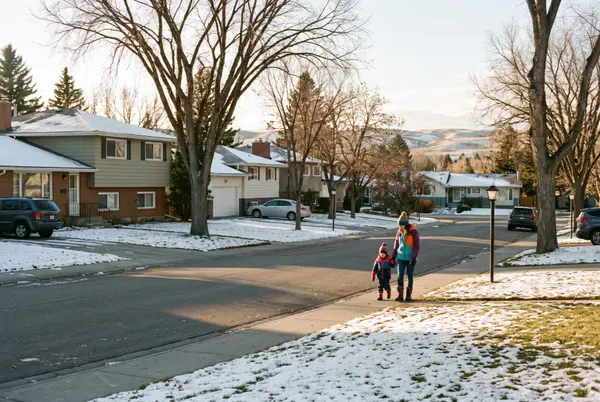
Calgary winters are cold, sunny and quick to change. In January, the coldest month, the average daily high is minus 1.5°C and the average low is minus 13.5°C, the city receives about 139 cm of snow a year, and it records roughly 2,400 hours of sunshine annually, according to Environment and Climate Change Canada's 1991 to 2020 climate normals. Warm chinook winds can push temperatures well above freezing in the middle of winter, then the cold returns.
If you are moving to Calgary from a milder part of Canada or from overseas, this guide covers what to expect month by month, why the weather swings so fast, how snow clearing works, how short the days get, how to get around, and how to stay safe in a cold snap.
Key Takeaways
- Cold, but not constantly frigid. January averages a high of minus 1.5°C and a low of minus 13.5°C, with occasional cold snaps much colder than that.
- Sunny for a winter city. Calgary averages about 2,400 hours of sunshine a year, and even December and January average more than 110 hours each.
- Snow comes in smaller amounts. About 139 cm falls over a year, typically 16 to 24 cm a month from November to March, and chinooks often melt it between storms.
- You clear your own sidewalk. Calgary homeowners have 24 hours after a snowfall ends to clear the public sidewalk next to their property, and fines start at $250.
- Short days are the real adjustment. Calgary gets under 8 hours of daylight at the winter solstice, compared with about 16.5 hours in June.
1. How Cold Does Calgary Get in Winter?
Winter in Calgary generally runs from November through March. The table below shows the average daily high and low for each month at Calgary International Airport, from Environment and Climate Change Canada's Canadian Climate Normals for 1991 to 2020.
| Month | Average daily high | Average daily low | Average snowfall | Average sunshine |
|---|---|---|---|---|
| November | 4.1°C | -7.5°C | 18.8 cm | 121 hours |
| December | -0.4°C | -12.1°C | 16.3 cm | 114 hours |
| January | -1.5°C | -13.5°C | 16.6 cm | 120 hours |
| February | 0.1°C | -11.8°C | 16.9 cm | 145 hours |
| March | 3.8°C | -8.1°C | 23.8 cm | 177 hours |
Averages hide the extremes. Short cold snaps can run far below these numbers, and the coldest temperature ever recorded at the airport station is minus 45°C. The flip side is that chinooks can push a mid winter afternoon well above freezing.
Why the sunshine matters
Calgary averages about 2,400 hours of sunshine a year in the same climate normals. Many newcomers find that a bright, dry minus 10°C day feels easier than a grey, damp day near freezing in a coastal city.
2. Why Does Calgary's Winter Weather Change So Fast?
The short answer is chinooks. A chinook is a warm, dry wind that comes down the eastern slopes of the Rocky Mountains and replaces cold Arctic air over southern Alberta. The Canadian Encyclopedia notes that in southwestern Alberta, about one winter day in three is a chinook day, and that temperatures have been observed to rise by 27°C in just two minutes.
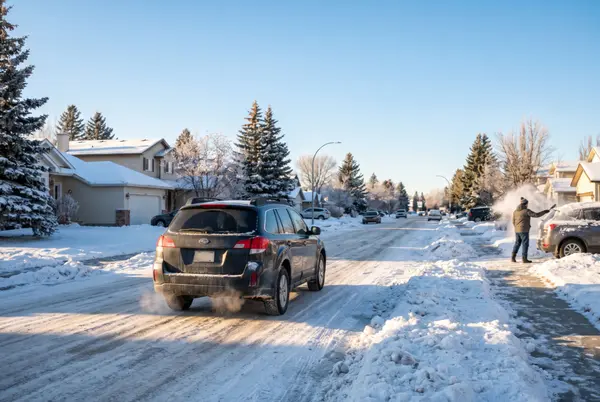
In practice, this means a week can start at minus 25°C and end with melting snow and puddles, then freeze again. Watch for the chinook arch, a band of clear sky over the mountains to the west, which often signals warm air is coming. The quick melt and refreeze is also why sidewalks and driveways can turn icy overnight.
3. How Much Snow Falls in Calgary, and Who Clears It?
Calgary averages about 139 cm of snow a year, spread over roughly 55 days with measurable snowfall, so it usually arrives in smaller storms rather than one deep, lasting snowpack. Most of it lands between November and March.
The City of Calgary clears roads in a set order under its Priority Snow Plan:
| What gets cleared | Timeline after snow stops |
|---|---|
| Pathways, City sidewalks, bridges, LRT platforms and about 1,300 busy bus stops | Within 24 hours |
| Busiest roads (over 20,000 vehicle trips a day), downtown roads and cycle tracks | 0 to 18 hours |
| Major community roads, bus routes, emergency routes and signalized intersections | 18 to 36 hours |
| Turn lanes, ramps, windrows at key crosswalks and feeder routes | 36 hours and beyond |
| Residential streets | Not typically plowed; crews level ruts and keep a hard snow pack |
Two things surprise many newcomers. First, residential streets are usually not plowed, so a vehicle with good tires and some clearance makes a real difference on side streets after a big storm. Second, Deerfoot Trail, Stoney Trail and Tsuut'ina Trail are maintained by the Province of Alberta, not the City.
The biggest one: under the City's snow and ice bylaw, property owners must clear the public sidewalk next to their home down to the bare surface within 24 hours of a snowfall ending. Fines are $250 for a first offence, $500 for a second and $750 for a third within 12 months, and the City can clear it for you and bill a minimum of $150 plus GST and an administration fee. A good shovel and a bag of ice melt or traction grit belong on every newcomer's first shopping list.
4. How Short Are the Days in a Calgary Winter?
This is the adjustment many newcomers underestimate. According to Sunrise Sunset, Calgary gets about 7 hours and 54 minutes of daylight on the winter solstice, December 21, compared with about 16 hours and 33 minutes at the summer solstice. In late December the sun does not rise until well after 9 a.m.
The City of Calgary's First winter in Calgary page notes that cold and darker days can be hard to adjust to, and links to supports for mood and mental health. Getting outside during the brightest part of the day, especially on sunny weekends, helps a lot.
5. How Do You Get Around Calgary in Winter?
- Winter tires are recommended, not required. Alberta Transportation confirms that Alberta has not made winter tires mandatory, but advises four winter or all weather tires for severe winter conditions. Look for the mountain snowflake symbol, which marks tires that meet a snow traction standard.
- Plan for icy walks. Boots with real tread matter more than a heavy coat. The City's newcomer page specifically warns about black ice and walking on frozen ground.
- Use the Plus 15 downtown. The Plus 15 network links downtown buildings through more than 16 km of climate controlled walkways and 86 bridges, open weekdays 6 a.m. to 9 p.m. and weekends and holidays 9 a.m. to 7 p.m. (closed December 25).
- Check conditions before you leave. The City posts snow and road updates, and Calgary Transit posts service changes during storms.
- Keep a winter kit in the car. The City recommends a first aid kit, and many Calgarians add a scraper, blanket, booster cables and a small shovel.
6. How Do You Stay Safe During a Cold Snap?
Environment and Climate Change Canada issues cold and extreme cold warnings based on local temperature and wind chill. In November 2025, the federal government announced that alerts are moving to colour coded levels under a new national weather alert system:
| Alert colour | What it means |
|---|---|
| Yellow | Most common. Hazardous weather with moderate, localized or short term impacts. |
| Orange | Less common. Severe weather with major or widespread impacts that may last several days. |
| Red | Rare. Very dangerous, potentially life threatening weather with extensive, prolonged impacts. |
The free WeatherCAN app sends these alerts to your phone. The federal guidance also notes that cold injuries can happen near 0°C, even with little wind, so cover exposed skin and dress in layers on any cold, windy day, not only during a warning. During the coldest days, the City's newcomer page also lists emergency shelter and daytime warming spaces for anyone who needs them.
7. How Can Newcomers Make the Most of a Calgary Winter?
Calgarians tend to lean into winter rather than hide from it. A few easy ways to start:
Get on the ice
- The Olympic Oval at the University of Calgary runs a Monday Night Toonie Skate, 6 to 8 p.m., for $2 (check the schedule, as dates can change).
- Many community associations flood outdoor rinks each winter.
Head outside on sunny days
- River pathways and city parks stay busy with walkers all winter.
- Holiday light displays such as the Calgary Zoo's ZOOLIGHTS are a long running family tradition.
For more low cost ideas, see our guide to the best free family activities in Calgary year round.
Frequently Asked Questions
How cold does Calgary get in winter?
January is the coldest month, with an average daily high of minus 1.5°C and an average low of minus 13.5°C, based on Environment and Climate Change Canada's 1991 to 2020 normals. Short cold snaps can be much colder, and the record low at the airport is minus 45°C.
How much snow does Calgary get?
About 139 cm a year on average, usually 16 to 24 cm a month from November to March. It tends to come in smaller storms, and chinook winds often melt it between snowfalls, so deep snow rarely builds up for the whole season.
Do I need winter tires in Calgary?
They are not required by law in Alberta, but Alberta Transportation recommends four winter or all weather tires for severe winter conditions. Because Calgary's residential streets are usually not plowed, most drivers find winter tires well worth it.
How long do I have to shovel my sidewalk in Calgary?
Property owners must clear the public sidewalk next to their property down to the bare surface within 24 hours of a snowfall ending. Fines start at $250 for a first offence and rise to $500 and $750 for repeat offences within 12 months.
How many hours of daylight does Calgary get in winter?
About 7 hours and 54 minutes on the winter solstice, December 21, compared with about 16 hours and 33 minutes in late June. In late December, sunrise comes after 9 a.m.
What is a chinook in Calgary?
A chinook is a warm, dry wind that descends the eastern slopes of the Rockies and replaces cold Arctic air. In southwestern Alberta, about one winter day in three is a chinook day, and temperatures can jump sharply in a matter of hours.
More Guides for Newcomers to Calgary
Settling in? These Bowhaven guides cover the next steps.
New to Calgary and Deciding Where to Live?
Winter is a good test of a neighbourhood: how close it is to transit, schools and indoor recreation, and how the streets feel after a storm. Viren helps newcomers compare NW Calgary communities with that in mind.
Published: November 4, 2026.
Categories
- All Blogs (70)
- About Calgary (2)
- City Services & Programs (2)
- Downsizing (1)
- Downtown Calgary (3)
- Families with Kids (18)
- Family Adventure Guides (2)
- First Time Home Buyers (15)
- Market Watch (4)
- Mortgages (6)
- Neighbourhood Spotlights (13)
- New to Calgary (14)
- NW Calgary (13)
- Parent Life & Family Wellness (1)
- Renovations & Repairs (2)
- Schools & Education Boards (6)
- Seasonal Family Activities (1)
- SW Calgary (2)
- Weekend Activity Guides (4)
- When Buying (20)
- When Refinancing (2)
- When Selling (15)
Recent Posts