
Phones, Screens & Kids: A Realistic Approach for the School Year
Phones, Screens & Kids: A Realistic Approach for the School Year
Alberta's provincial rule already sets the floor: personal phones and social media are restricted during instructional time for every K-12 student, with narrow exceptions for medical or learning needs. What is left for families to figure out is everything the school day does not cover, mornings, evenings, weekends, and the specific age-by-age judgment calls a provincial policy was never going to make for you.
Calgary families moving here from other provinces or countries are often surprised at how much stricter Alberta's approach is than what they are used to. This guide covers what the rule actually says, how Calgary's two largest school boards apply it, what pediatric guidance actually recommends, and a realistic way to build on top of the school rule at home.
Key Takeaways
- Alberta's Standards for the Use of Personal Mobile Devices and Social Media in Schools has been in effect since September 1, 2024, and restricts personal device and social media use during instructional time for all K-12 students provincewide.
- CBE (Calgary Board of Education) applies the strictest version: students in kindergarten through grade 9 cannot use personal devices at all during the school day, and grades 10-12 cannot use them during class time unless a teacher specifically permits it.
- CCSD (Calgary Catholic School District) differs slightly: grades 7-9 students may use personal devices outside of class time, a small but real difference from CBE's approach for the same grades.
- The Canadian Paediatric Society reports Canadian high schoolers average roughly 7.5 hours of daily screen time, and its guidance points to moderate use, roughly 2 to 4 hours daily, as associated with some social benefits for adolescents, while both very low and very high use are linked to worse outcomes.
- A specific number matters less than consistent, predictable boundaries around meals, homework, and bedtime, which is where most of the actual friction in families shows up.
1. What Alberta's School Phone Policy Actually Says
Alberta Education's Standards for the Use of Personal Mobile Devices and Social Media in Schools took effect September 1, 2024, provincewide. The core rule restricts personal mobile device use and access to social media platforms during instructional time for all students from kindergarten through grade 12, with exceptions built in for documented medical needs or individualized program plans. This is a provincial floor, and individual school boards can apply it more strictly, which is exactly what has happened in Calgary.
2. How CBE and CCSD Apply the Rule Differently
The two largest Calgary school boards took the provincial standard and built slightly different rules on top of it.
| Grade range | CBE (Calgary Board of Education) | CCSD (Calgary Catholic School District) |
|---|---|---|
| Kindergarten to Grade 6 | No personal device use during the school day | No personal device use during the school day |
| Grade 7 to 9 | No personal device use during the school day | Personal device use allowed outside of class time (recess, lunch) |
| Grade 10 to 12 | No personal device use during class time unless a teacher permits it | No personal device use during class time unless a teacher permits it |
A NW Calgary REALTOR's Take
Every fall, this is one of the first questions I hear from families relocating to Calgary, often before they have even asked me about a specific school's catchment boundary. Parents want to know what the actual day-to-day rule is before their kids start, not just which board a community feeds into.
3. What Pediatric Guidance Actually Recommends
The Canadian Paediatric Society's digital media guidance does not set a single hard number for teenagers the way it does for younger children. Instead, it reports that Canadian high schoolers average approximately 7.5 hours of screen time per day, and frames moderate use, roughly 2 to 4 hours daily, as the range associated with some social and developmental benefits for adolescents. Both very low use and very high use are associated with worse outcomes, which is a more nuanced picture than either "no screens" or "no limits" would suggest.
Why a Single Number Does Not Work Well for Teenagers
Younger children's guidance is more clear-cut because most of their screen time is passive. Teenagers use devices for schoolwork, social connection, and entertainment all at once, often simultaneously, which is why pediatric guidance shifts from a hard limit toward looking at the type of use and its impact on sleep, mood, and in-person relationships.
4. Building a Realistic At-Home Approach
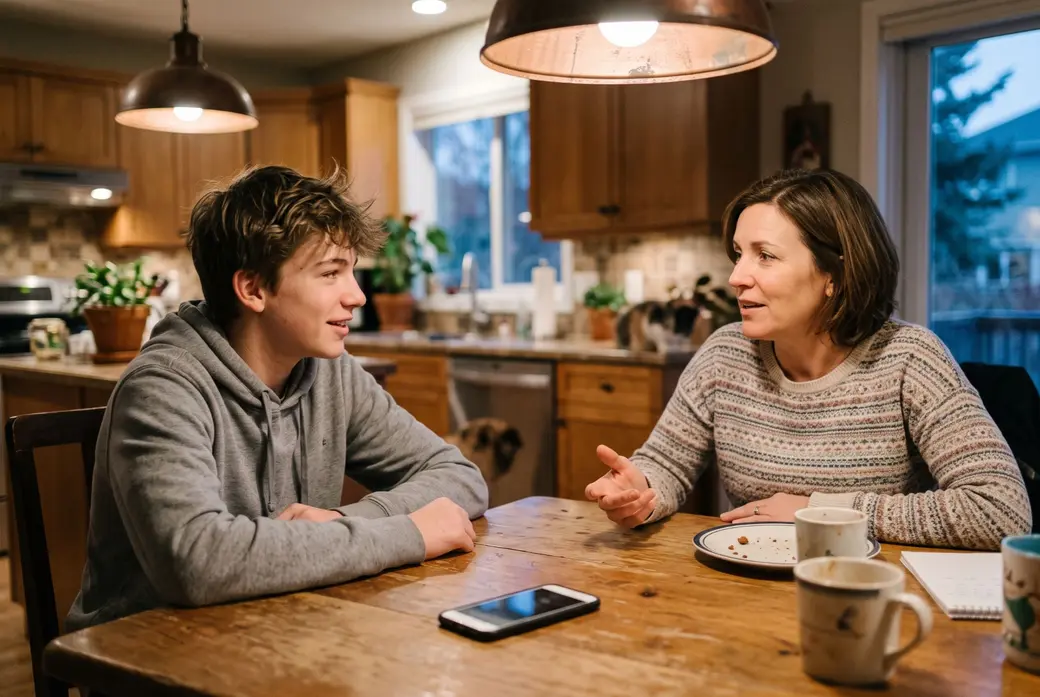
Given that the school day is already governed by a provincial rule, the more useful conversation for families is what happens before and after school. A few boundaries do most of the work:
- A consistent device-free window at meals. This is less about screen time totals and more about protecting a predictable window for actual conversation.
- Devices out of bedrooms at a set time before sleep. Screen use close to bedtime is one of the more consistently documented disruptors of adolescent sleep.
- A clear homework-first expectation, rather than an all-day ban, which tends to produce less conflict than a blanket restriction.
- Age-appropriate flexibility, since a Grade 3 student and a Grade 11 student need very different levels of autonomy, and treating them identically usually backfires with the older child.
A NW Calgary REALTOR's Take
I tell newcomer families to ask a prospective school directly how it enforces the board's policy day to day, not just what the policy says on paper. Enforcement consistency varies more between individual schools than the printed policy would suggest, and it is a fair question to ask during a school tour.
Frequently Asked Questions
What is Alberta's school phone policy?
Since September 1, 2024, Alberta restricts personal mobile device and social media use during instructional time for all K-12 students, with exceptions for documented medical or learning needs.
Are phone rules the same at CBE and CCSD schools?
Mostly, but not entirely. CBE bans personal devices all day for kindergarten through grade 9, while CCSD allows grades 7-9 to use devices outside of class time, such as recess and lunch.
How much screen time is normal for a teenager?
The Canadian Paediatric Society reports Canadian high schoolers average roughly 7.5 hours of daily screen time, though its guidance focuses more on the type of use and its effects on sleep and mood than on a single target number.
Is some screen time actually good for teenagers?
Pediatric guidance associates moderate use, roughly 2 to 4 hours daily, with some social and developmental benefits for adolescents, while both very low and very high use are linked to worse outcomes.
Do high school students get more phone freedom than younger students in Calgary?
Somewhat. Both CBE and CCSD allow grades 10-12 to use devices during non-class time, and during class time only with specific teacher permission, which is more flexibility than younger grades receive.
What should I ask a Calgary school about its phone policy?
Ask how the board's policy is actually enforced day to day at that specific school, not just what the written policy says, since consistency varies between individual schools.
More Guides for Calgary Families
Published: September 10, 2026.
Categories
- All Blogs (66)
- About Calgary (2)
- City Services & Programs (1)
- Downsizing (1)
- Downtown Calgary (3)
- Families with Kids (17)
- Family Adventure Guides (2)
- First Time Home Buyers (16)
- Market Watch (3)
- Mortgages (5)
- Neighbourhood Spotlights (12)
- New to Calgary (12)
- NW Calgary (12)
- Parent Life & Family Wellness (1)
- Renovations & Repairs (2)
- Schools & Education Boards (6)
- Seasonal Family Activities (1)
- SW Calgary (2)
- Weekend Activity Guides (4)
- When Buying (19)
- When Refinancing (2)
- When Selling (14)
Recent Posts